
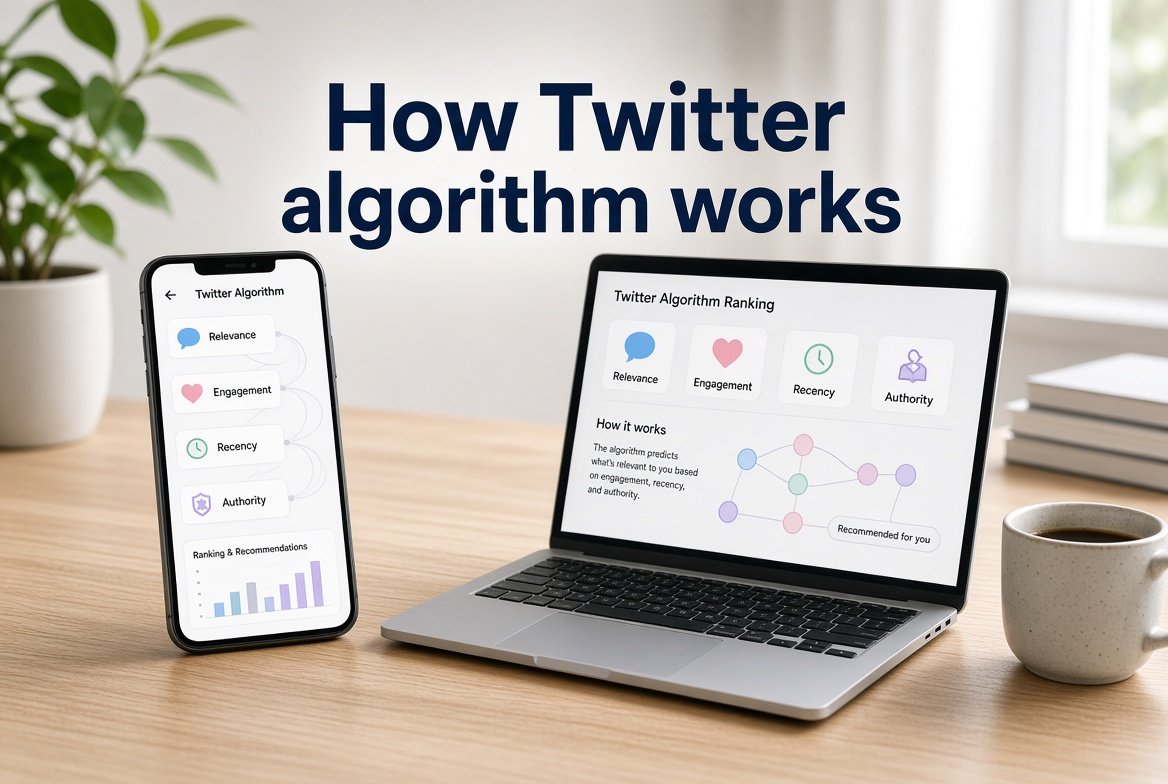
The Twitter algorithm decides which posts people see and in what order. It is the system that ranks content in the For You timeline and influences how far a post travels beyond a person’s direct followers. Understanding the basic idea behind it helps explain why some tweets get wide visibility while others stay limited.
This article breaks down how the algorithm generally works, what factors appear to matter most, and why results can feel unpredictable.
What the Algorithm Is Trying to Do
At its core, the algorithm aims to show people content they are likely to find interesting or engaging. It looks at signals from both the person viewing the timeline and the posts themselves. The goal is to keep users on the platform longer by presenting material that leads to likes, replies, reposts, and continued scrolling.
This is different from a simple chronological feed, where posts appear strictly in the order they were published. The ranked timeline mixes recent posts with older ones that the system thinks will perform well for that specific user.
Main Signals the System Uses
While X does not publish every detail of its ranking system, several factors are widely understood to influence distribution:
- Engagement: Posts that receive likes, replies, reposts, and clicks tend to be shown to more people.
- Recency: Newer posts usually have an advantage, especially in the early period after publishing.
- Relevance: The system considers topics, accounts, and content types a user has interacted with before.
- Account relationships: Posts from accounts a person follows or interacts with regularly are more likely to appear.
- Media and format: Posts with images, videos, or clear structure often perform differently from plain text.
These signals are combined to create a relevance score for each post in relation to each user. Higher scores increase the chance of appearing in the For You timeline.
For You Timeline vs Following Timeline
X offers two main ways to view content. The Following timeline shows posts mainly from accounts a person follows, closer to chronological order. The For You timeline is more heavily ranked by the algorithm and includes posts from a wider range of accounts.
Most of the visibility conversation focuses on the For You side because that is where algorithmic ranking has the strongest effect. A post that performs well early can be distributed far beyond the original follower base.
Why Reach Can Suddenly Drop
Many users notice periods when their posts receive less attention than usual. This can happen for several reasons:
- Lower early engagement compared to previous posts
- Changes in posting frequency or content style
- Increased competition from other content at the same time
- Temporary limits applied by spam or integrity systems
- Shifts in how the algorithm weights certain signals
A drop in reach does not always mean a penalty. Sometimes it simply reflects normal variation in how content is ranked on a given day. In other cases, reduced distribution can be linked to patterns the system flags as low quality or repetitive. You can read more about visibility limits in our article on Twitter shadowban.
What the Algorithm Does Not Guarantee
The algorithm does not promise equal distribution to every post. Two accounts with similar follower counts can see very different results based on engagement patterns, content type, and timing. Even strong posts can underperform if they do not receive early interaction or if the topic is less relevant to active users at that moment.
Official information about how X approaches ranking and recommendations is available on the X timeline help page.
Practical Takeaways
People who want better organic visibility usually focus on a few consistent habits:
- Post content that encourages replies and conversation
- Share material that is clear and easy to understand quickly
- Pay attention to early engagement in the first hours after posting
- Avoid repetitive or spam-like patterns
- Accept that not every post will perform the same way
These steps do not control the algorithm, but they align better with the signals it tends to reward.
Final Thoughts
The Twitter algorithm ranks posts based on engagement, relevance, recency, and relationship signals. Its main purpose is to show users content they are more likely to interact with. This system explains why some posts travel widely while others remain limited to a smaller audience.
Results will always vary. Understanding the basic mechanics makes the platform feel less random and helps set realistic expectations about reach and visibility.